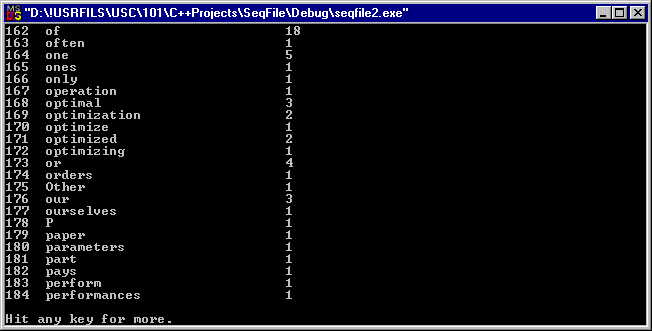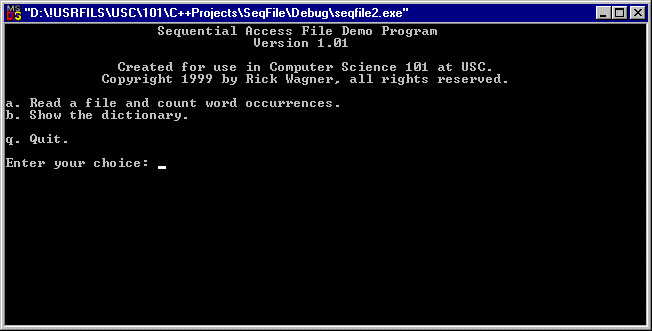
Program start-up screen.

The example program opens an input file by first prompting the user to enter the file specification (drive, path, file name, file extension). The file is then opened for read access and each character is read sequentially until the end of the file (EOF) is encountered. Here's the source code.
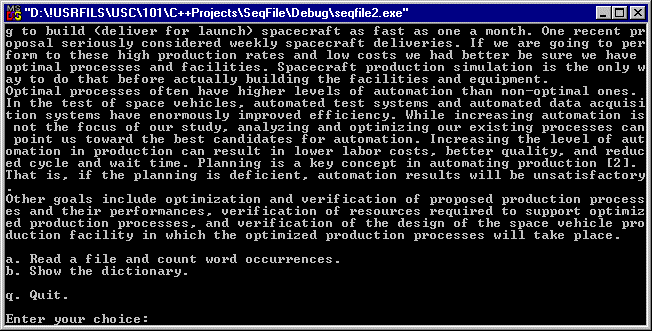
The program reads the input file a character at a time and "parses" the input: it detect word boundaries and inserts contiguous "alphanum" sequences as words into the dictionary array. If a word is duplicated, it increments an occurrence counter.
The user may open many different files to build a dictionary up to 10,000 words. The word list can be displayed with the number of occurrences for each word.